Colours, Sights & Patterns At Kampong Glam

In the 19th century, Kampong Glam was essentially an ethnic district with a strong Malay-Arab influence. It was a place where locals patronized for their Arab-Muslim traditional foodstuff and merchandise...

Immersive 4K HDR Viewing Experience With Sony Projectors

Sony’s latest innovative laser light source projector is High Dynamic Range (HDR) compatible with native 4K resolution, creating an amazling clear lifelike experience, as if you are there yourself…

Back 30 Years To Upper Serangoon Shopping Centre

Iconic along this stretch of road is the rectangular block of a nondescript beige-tiled building. The facade of this building is blocked by an overhead bridge. And this is the front entrance to a shopping centre - the Upper Serangoon Shopping Centre… (USSC).

Monti - Singapore's Longest Brunch Every Sunday

Enjoy brunch by the bay concept, complete with stunning views of the Marina Bay and its surroundings, and a fabulous menu and music programme to match at Monti…

Where Freemasons Convene

In 1886, the Masonic Club was established to support Singapore freemasonry. Guess who was the first Freemason in modern Singapore?

Showing posts with label Singapore River. Show all posts

Singapore Cricket Club - Luncheon With Paul Askew

The Singapore Cricket Club (SCC), the premier sports club on the Padang commemorated Singapore’s Bicentennial with two weeks of events and activities while at the same time raising funds for sports development under the auspices of SportCares.

On 22 October, the SCC featured a Luncheon & Cooking Demonstration with celebrity chef Paul Askew.

Champagne was served in the pre-lunch cocktail reception...

The menu was thoughtfully set out in an elegant folder for each individual diner...

 The luncheon was held at The Padang Restaurant with walls decorated with nostalgic paintings of old Singapore...

A huge video screen with live video streaming to allow all to have a close-up view of the cooking demo...


APPETIZER - AMUSE BOUCHE

The first dish for the luncheon was the Amuse Bouche with a theme on onion. Chef Askew put considerable thought into this modest dish. It was only after his explanation did we understand how complicated the multi-layer preparation was.

At the top is a thick mousse of white onion and potato soup. Embedded within the soup was a sprinkling of crispy baby onion rings to create a surprise to the liquid texture, followed by chives and herb oil. Right at the bottom is the coffee-brown caramelised shallot puree, creating a dessert-like finish to the starter dish.


Wine Pairing : Saint Louis Blanc de Blancs Brut, France
Named after King Saint Louis who reigned over France in the Middle Ages, renowned for his charity and much beloved by his people, this aromatic sparkling wine is refreshing with a good balance of green apple flavour.


STARTER - Barramundi Fillet

Freshly-delivered from Jurong Port, the barramundi was roasted to perfection with a crispy skin and semi-seared outer crust. Risotto was stir-fried with aromatic saffron to create that delicious yellow texture with mussels.

The dish was tastefully decorated with a circle of red wine reduction, a simmered liquid made with red wine and vinegar, and dotted with exquisite beluga caviar, which added to the taste and colour of the light-coloured fillet.

It was not every day that every dish you eat is cooked right before you, with each procedure carefully explained in detail. Having such an explanation allowed us to savour each mouthful with greater consideration and appreciation for the thought that Chef Askew has put into it before it is presented to each of us on a plate.


Wine Pairing : Noblesse Sauvignon Blanc 2017, Central Valley, Chile
This was a medium-bodied white wine, bright with golden hues, and aromas of lime and pear with notes of spices. Light on the palate, it delivers a crisp and clean taste with a lingering finish.


MAIN - Honey-Glazed Duck Breast

The main was heavier on the palate with a honey-glazed duck breast with lavender and the flavourful pan-fried foie gras doused with roast orange puree, and served with duck fat potatoes, charred baby gem lettuce, peas, and spring onion.


One important lesson that we've learnt from Chef Askew is the respect he puts into his food. Every possible part of the animal he cooks is put to good use. In this case, the duck fat contributes to the richness of the potatoes, creating a smooth texture for the normally starchy side.

Wine Pairing : Noblesse Merlot 2017, Central Valley, Chile
The Merlot was deep red with hues of purple. The initial taste was tannic, on opening up, aromas of red berries and blackberry with notes of spices can be detected. When paired with the duck, the fruit-laden intensity of the red can be savoured.


DESSERT - Pavlova

Ending it all is a sweet Pavlova of gin-soaked blackberries, raspberries and strawberries with Turkish Delight ice cream and white chocolate soil.


To find more about the Singapore Cricket Club and the events for Singapore’s Bicentennial, visit scc.org.sg.


About Paul Askew

Paul Askew is Chef Patron of The Art School in Liverpool, now in its 5th year of business following its launch in September 2014. For 12 years before, Paul ran The London Carriage Works in Liverpool, where he and the team helped to build the city’s reputation for gastronomic excellence by opening its first boutique hotel with fine-dining restaurant.

With over three decades of experience working in the restaurant industry, Paul Askew has a firm reputation as a pioneer of excellent modern British cuisine, as well as having an unmatched level of commitment to developing the next generation of culinary talent.

Throughout his career, Paul has become a stalwart of Liverpool’s burgeoning culinary scene, helping the city to grow to become the gastronomic hub that it is now, and cementing him as one of the country’s most popular chefs.

About SportsCares

Established in 2012 as the philanthropic arm of Sport Singapore, SportCares activates sport as a force for social good; leveraging sport experiences to empower the vulnerable and the underserved communities in Singapore. Through its programmes and initiatives, SportCares creates opportunities that nurture positive values and practical capabilities in children and youth at-risk, building their confidence and imbuing in them a positive worldview.

SportCares serves to inspire and enable:  
  • Children and youth from low-income families
  • In-risk and at-risk youth 
  • Vulnerable seniors
  • Persons with disabilities (PwDs) and special needs (SNs)

Singapore Cricket Club - Peranakan Fiesta

The Singapore Cricket Club (SCC), the premier sports club on the Padang commemorated Singapore’s Bicentennial with two weeks of events and activities while at the same time raising funds for sports development under the auspices of SportCares.

On 18 October, the SCC Peranakan Fiesta featured a Straits Chinese buffet feast prepared by The Peranakan’s Chef Raymond Khoo.  

(Photo Source : SCC)

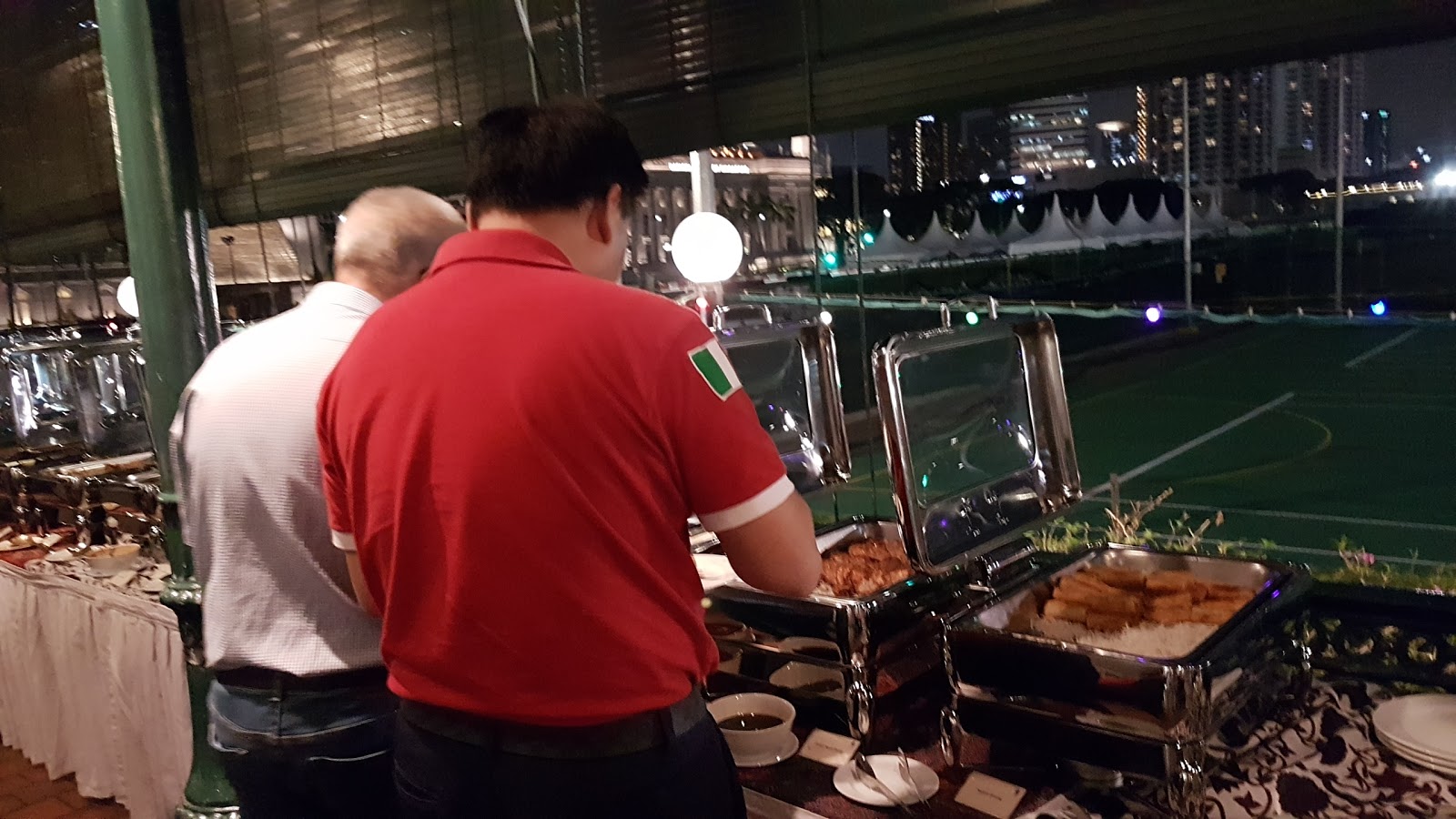
The Peranakan Fiesta was held at The Oval with its choice of alfresco dining on the verandah or an aircon dining area...

Food was served buffet style amidst the scenic view at the Padang...

Start your meal with light bites like popiah...

The all-time favourite was Ayam Buah Keluak with its thick gravy simmered to richness...

Savour traditional Peranakan desserts with their mix of sweetness and a tinge of coconut flavouring...

The plate of traditional Perankan declicacies...

Local night "street" stalls at the Club’s Courtyard were selling batik patchwork pieces, rattan bags and print crafts among other items.

The Peranakan Voices (TPVs) choir and band from The Peranakan Association Singapore  provided live entertainment with their melodious voices and colourful Peranakan outfits...

To find more about the Singapore Cricket Club and the events for Singapore’s Bicentennial, visit scc.org.sg.


About Chef Raymond Khoo

The Peranakan opened its doors in June 2016 and it is currently the only traditional Straits Chinese cuisine restaurant along the Orchard Road belt. The restaurant is owned and managed by Executive Chef Raymond Khoo who serves authentic home-cooked Straits cuisine based on recipes handed down from three generations of Nonyas and Babas in his family. 

An F&B veteran. Raymond has been behind the creation of many novel concepts like the first of Singapore’s Hong Kong style cafes - Tong Shui Café (2006) at River Valley, the rainforest themed 3 Monkeys (1997) at Orchard Road and the Singapore hawker food corner, Rasa Singapura (2008) at The Venetian, Macau. 

He is also the founder of The Saturday Movement (saturdays@lengkokbahru), comprising a non-profit group of professionals and volunteers who donate their time and resources each Saturday afternoon, come rain or shine, to see to the needs of a group of elderly residents living alone, also providing free tuition for the children living in one of Singapore’s oldest HDB estates, Lengkok Bahru.

(Photo Source : SCC)

About SportsCares

Established in 2012 as the philanthropic arm of Sport Singapore, SportCares activates sport as a force for social good; leveraging sport experiences to empower the vulnerable and the underserved communities in Singapore. Through its programmes and initiatives, SportCares creates opportunities that nurture positive values and practical capabilities in children and youth at-risk, building their confidence and imbuing in them a positive worldview.

SportCares serves to inspire and enable:  
Children and youth from low-income families
In-risk and at-risk youth 
Vulnerable seniors
Persons with disabilities (PwDs) and special needs (SNs)


ACM - A Trip Back To Ancient Civilizations

It's been the longest time since Merlion Wayfarer stepped into a museum. Recently, on one of her days off, she decided to venture along the banks of the Singapore River, and right into the museum at Empress Place.

The Asian Civilisations Museum (ACM) showcases Singapore's diverse heritage by charting the exploration and history behind the people from around the region that have settled on Singapore's shores over the past two centuries. 


Being the only museum in the region devoted to exploring the artistic heritage of Asia, especially the ancestral cultures of Singaporeans, it was founded in 1993, and in its present building by the Singapore River since 2003. On the ground floor, the Trade and the Exchange of Ideas gallery houses artefacts and artworks that tell stories of Singapore’s history as an emporium for global trade. 


In the riverfront Khoo Teck Puat gallery, the famous Tang Shipwreck collection is located - A virtual time capsule of treasures from 9th-century China hidden from the world till its discovery in 1998. The adjoining Kwek Hong Png Wing houses the museum’s first contemporary art space. The third floor houses over 300 magnificent Chinese ceramics from the museum's collection. Other galleries in the ACM include the Ancient Religions Gallery and the Scholar in Chinese Culture gallery.   


Merlion Wayfarer spent the most time on Level 2, which houses Faith & Belief galleries. These galleries present their origins in Asia, their spread across the continent by land and by sea, and their localisation each step of the way. Here are some snapshots of the photo-worthy artefacts:


Model Stupa
Gandhara, 3rd or 4th Century, Schist

This beautifully carved stupa is decorated on the bottom tier with images of the Buddha seated in meditation and flanked by two attendants. The Corinthian columns show how classical Mediterranean art influenced Gandhara. The lotus petals that decorate the dome are symbols of Buddha. The finial on top marks the vertical axis of the stupa and the position of the relic chamber inside.


Head of Bodhisattva
Gandhara, Around 4th Century, Terracotta

The face and curly hair show the powerful influence of the West on the development of Buddhist art. Ancient Greece and Rome played a significant role in the development of Gandhara (in present day Pakistan and Afghanistan).

Bodhisattvas wear jewellery, and have beards and moustaches, which distinguishes them from figures of the Buddha. The jewellery seen here is typical of the Gandhara period. A circular indent on his forehead, called an urna, is a mark of nobility and illumination; it would originally have been inlaid with a precious stone.

The sculpture was modelled with wet clay that was then fired. This technique allowed deep indentations and free forms, as evident in the beard and hair. Terracotta (literally, baked clay) allowed large statues to be assembled from several places.


Atlas
Gandhara, 3rd Century, Schist

In ancient Greek mythology, Atlas is a Titan who holds up the sky. Such figures were often placed with scenes from the Buddha's life. This shows how Western classical art was adopted to adorn Buddhist art in Gandhara.


Head of a Buddha
Thailand, Lan Na, 16th Century, Bronze

This Buddha, when it was complete, would have looked own serenely upon those who worshipped it. It was produced in Lan Na (Northern Thailand), a major bronze-casting centre, its prominent cranial bump (ushnisha) was originally lopped by a flame finial (now missing) similar to those on the two Sukothai Buddha images on display in this gallery.

As with Sukhothai, Lan Na was influenced by Sri Lankan Buddhism. Styles flowed between the various kingdoms, and Buddha images from Lan Na and Sukhothai share many similarities.

Influence also moved by less peaceful means : In the 15th century, Sawankhalok was captured by Tiloka, the Lan Na king, who then repulsed a number of attempts of Sukhothai to regain the city.


The Great Goddess
India, Madhya Pradesh, 11th Century (Paramara Dynasty), Sandstone

The Great Goddess has countless names and forms, though she is mostly depicted as Durga, the main focus of shakti worship (devotion to female power and energy). This ten-armed figure sits in the position of royal ease and is decorated with exquisite jewellery. The flying garland bearers indicate her divine status.

A remarkable example of art from the Paramara Dynasty (9th/10th to 14th century), the sculpture hails from Bijamandal Temple (now in ruins), originally dedicated to Charchika-Devi, a form of the goddess Durga.


Shield, Dayak of Kayan Tribe
Borneo, Early 20th Century, Wood, Pigments

The shield has an applied design showing the Tree of Life. Facing pairs of hornbills and crocodiles indicate the upper and middle spheres of the universe. The pairs of snakes top and bottom indicate the lower world. The handle on the reverse is surrounded by floral motifs.


Model of a Temple
Myanmar, Yangon, 1914, Silver


This model takes the form of a Burmese temple, showing how the British appropriated traditional forms to suit their own purposes. The base is decorated with scenes of logging and trading company buildings. The front plaque is inscribed:

"Presented to Berkeley John Byng Stephens Esquire by employees of the Bombay Burmah Trading Corporation Limited Rangoon on his retirement, December 1914"

At the time, the company was one of the largest in the region, with the concessions in colonial Burma, Java, Siam and southern India.


Mudras

The Meanings of the Buddha's Hand Gestures

Bhumisparsha Mudra
This is the most common mudra for seated images of the Buddha in Thailand. When the Buddha is touching his right hand to the ground - bhumisparsha mudra - he is "calling the earth to witness".

Near the end of his long meditation, the Buddha calls the earth goddess to witness his right to enlightenment, and for her to help defeat the armies of Mara, the demon trying to tempt and distract him.

Seated Buddha, Sukhothai Kingdom (Thailand), 15th or 16th Century


Dharmachakra Mudra
The Buddha's hands here are in dharmachakra mudra. This gesture signifies the "turning of the wheel of Buddhist Law". All the teachings of the Buddha make up Buddhist Law, and thus this gesture shows him teaching.

Buddha Teaching, Gandhara, 3rd or 4th Century


Abhaya Mudra
This hand gesture - abhaya mudra - signifies fearlessness. Sometimes you see Buddhas with both hands in abhaya mudra.

Walking Buddha, Sukhothai Kingdom (Thailand), 15th or 16th Century


Dhyana Mudra
This Buddha sits serenely with hands in dhyana mudra, the gesture of meditation.

Seated Buddha, Thailand, 19th or early 20th Century


The ACM is located at 1 Empress Place. For more information, read its website here.


Starbucks - One Tree For Every Bag

The Fullerton Waterboat House
Singapore River
September 2015

Brewing a great cup of coffee is both and art and a skill, made with passion and precision. This evening, Merlion Wayfarer was honoured to be able to attend a Coffee Seminar at Starbucks. The event was held at Starbucks' 100th Store at The Fullerton Waterboat House.


To give this historically-rich building a modern take yet preserve its maritime history, this iconic outlet sports a nautical-themed interior and is the biggest fully air-conditioned store in Singapore. Pillars in the store are decked out with ropes while counter tops feature round edges inspired by the elegantly curved facade and curved balconies of the building.


The Starbucks Coffee Seminar starts with a seat at a table. 


Placed on your table is a platter containing these items:
A cup of water, a cross-section of lemon, a slice of lime, a few petals of star anise,
some cinnamon sticks, bits of yellowish lemon zest, an orchid and some rose petals...

Half-cover your coffee brew with your pal. Then smell each item. Open your palm and take a deep breath. Can you tell which flavours and aromas are in your coffee? Each coffee-producing region of the world is known for its own unique beans.


This was the first time that Merlion Wayfarer experienced the Starbucks Slow Bar with a manual Bali brew from the Clover machine.

Starbucks Reserve coffees are made from rare and exquisite beans which have been hand sourced from around the globe for their unique flavours. The Bali Vintage Klasik is described as "sweet lemon and caramel notes with a nutty finish". According to the label, what makes this coffee distinct from its Indonesian neighbors is the processing method. Balinese coffees were traditionally fully washed and dry-hulled, a style yielding exceptional quality, but so labour-intensive that many farmers moved to faster processing methods. Now three villages have returned to "vintage" processing. The result is a coffee with familiar washed Indonesian herbal low notes, yet with floral and citrus sweetness not found in coffees from this region.

\

It is said that Starbucks CEO Howard Schultz purchased the simply-named start-up Coffee Equipment Company after trying a cup brewed by a Clover machine and declaring it to be "the best cup of brewed coffee I have ever tasted". In fact, this outlet is the first in Singapore offering a split-bar concept with a Clover machine where coffee lovers can fully experience the depth of each blend.

The result is not the kind of coffee you add milk or sugar to, and it sure does not begin with anything instant. Don't expect your drink in 5 minutes. Not even 10. Be prepared to spend at least half an hour here at the Slow Bar to enjoy your cuppa.


Coffee is loaded from the top of the machine into an electronically-controlled piston,
with water from a tap above added.

The process is indicated on the display, right down to the exact second.
After some stirring and brewing time, the piston pushes the coffee "cake" upwards, 
with a 70-micron mesh drawing the grounds up to the top of the machine.

At the same time, a vacuum sucks the coffee itself out of the bottom, into a waiting container.

The immediate consequence of the Clover machine and its precision may not necessarily better coffee, after all, coffee tastes can be quite personal, but instead more attention to coffee. By creating this rigorous laboratory-like precision brewing environment, the Clover machine encourages baristas to explore the nuances of different beans, where and how they were grown, dried, sorted and roasted. Coffee drinkers can now customize their coffee to taste (more citrus blends anyone?) by making minute changes to brewing time, temperature, and quantity of water. And coffee can now be described with the width of wine palate vocabulary.


Another option available at the Slow Bar - The French Press, comprising of a narrow cylindrical beaker, usually made of glass or clear plastic, equipped with a metal or plastic lid and plunger that fits tightly in the cylinder and has a fine wire or nylon mesh filter.

Pourover coffee starts with (freshly) ground coffee, a filter, and a filter holder, often called a "pourover dripper". At the most basic level, pourover brewing involves pouring water over and through the grounds to extract the coffee flavors into your cup or serving vessel.


It's not that simple. Firstly, the water is not just poured directly into the cup at one shot. Instead, brief breaks between each "pour" are required.

Pourover brewing continuously replenishes the liquid surrounding the coffee grounds with new, fresher water. This promotes a faster, more efficient brew with each fresh pour extracting more from the surface layers of the grounds. Pouring one stream of water, rather than from a few little streams results in a brewing environment a few degrees higher, just from reducing the surface temperature loss from those narrow water streams. 


Start by pouring at the centre of the cone, and working your way out to the sides in a circular motion. One of the major byproducts of roasting coffee is carbon dioxide gas. When the coffee grounds are doused with hot water, this gas is able to escape and it bubbles out. The problem is that if carbon dioxide gas is going out, water is not able to get in. Hence, the need for regular pauses.


Just enough brewing water is poured to wet all of the grounds. Then stop and wait for about 30 seconds to let the carbon dioxide escape. The coffee grounds will then swell and expand, resulting in what coffee professionals call a "bloom."


The shiny "crystals" simmering on the top of the coffee...

From now till September 2016, as part of the "One Tree For Every Bag" initiative, Starbucks will distribute coffee trees to farmers who have been most impacted by coffee rust, a plant fungus that damages millions of coffee trees around the world, making it harder for farmers to produce high-quality coffee for the entire industry. Do your part to support the coffee farming community by purchasing a bag of coffee today.